
Discovering a leak, missing shingles or another roof problem does not automatically mean your home needs a new roof. Some failures can be corrected with a focused repair. Others are symptoms of broader deterioration that may make replacement the more practical long-term solution.
The first step is determining what is failing, why it is failing and what condition the surrounding roof is in.
Roof age provides useful context, but age alone should not decide the recommendation. Installation quality, shingle condition, flashing details, roof decking, ventilation, previous repairs and remaining useful life all matter. We Roof Indy evaluates these factors for homeowners in Carmel, Fishers, Noblesville, Zionsville, Geist and throughout Central Indiana.
A repair is often reasonable when the problem is limited to a specific area and the surrounding roofing system remains in serviceable condition.
A relatively young roof is often a stronger repair candidate because more useful service life may remain after the problem is corrected. That does not mean an older roof can never be repaired. An older roof may still be a reasonable repair candidate if the surrounding shingles remain flexible and intact, compatible materials are available and the repair can address the actual failure.
The key question is not simply, “How old is the roof?” It is, “Will this repair solve the problem and provide reasonable value based on the condition of the rest of the roof?”
Examples may include:
Replacement may be the better long-term choice when the visible problem is part of a larger roofing-system failure.
Conditions that may support replacement include:
A roof can sometimes be technically repairable while still being a poor candidate for another repair. Opening an older or brittle roof may damage nearby shingles, and a successful repair in one location does not correct deterioration elsewhere.
Replacement should be recommended because of the overall condition and expected performance of the roof—not simply because a leak exists.
Learn more about our roof replacement and roof repair services.
There is no single percentage or age rule that correctly answers every repair-versus-replacement question. A practical recommendation should consider the following factors together.
Is the failure isolated or systemic?
A failed chimney flashing detail may be confined to one location. Shingle deterioration across several slopes indicates a broader issue. The recommendation begins with correctly identifying the source rather than treating the first visible symptom.
What condition is the surrounding roofing system in?
A localized repair is more valuable when the adjacent shingles, flashings, decking and roof accessories remain functional. If the materials around the repair area are brittle, deteriorated or poorly installed, completing a durable repair may be more difficult.
How much useful service life appears to remain?
No inspection can guarantee exactly how long a roof will last. However, its current condition can indicate whether the roof is likely to provide meaningful service after the repair or whether additional problems should reasonably be expected.
What will the repair actually solve?
A well-defined repair should identify the failed component, the materials that must be removed and the details that will be rebuilt. Homeowners should also understand what the repair will not correct.
Is the repair cost reasonable for the benefit it provides?
A repair that restores a sound roof can be a sensible investment. Repeatedly investing in isolated repairs becomes less attractive when the rest of the roof is deteriorating or the repair requires significant work on a system with limited remaining life.
How long does the homeowner expect to own the property?
A homeowner planning to remain in the home may place greater value on replacing a deteriorated system and reducing uncertainty. Someone preparing for another improvement, addition or property transition may have different priorities. The roof’s condition still matters, but the homeowner’s plans help put the available options into context.
A useful roof evaluation looks beyond the location where water appeared inside the home. Water can travel along decking, framing or other materials before becoming visible.
The goal is to understand the roofing system well enough to explain both the immediate problem and the surrounding conditions that affect the recommendation.
We evaluate relevant conditions such as:
Central Indiana roofs experience changing conditions throughout the year. Severe thunderstorms, strong winds and hail can cause sudden damage. Freeze-thaw cycles and winter moisture can expose weaknesses around flashings, penetrations and roof edges. Summer heat also contributes to the long-term aging of roofing materials.
Weather exposure does not automatically mean a roof needs replacement. The location, extent and type of damage still matter.
A few wind-damaged shingles on an otherwise serviceable roof may be repairable. Damage across multiple slopes may require a broader assessment. Ice or winter moisture near an eave may point to a flashing, ventilation, insulation or water-management issue rather than a simple shingle failure.
The appropriate solution depends on what happened to the roof and how well the surrounding system can continue performing.
A two-story home in Fishers, Indiana had an active leak near the chimney. The roof was installed with Owens Corning Oakridge shingles in the Teak color.
During the evaluation, exposed fasteners and lifted shingles were found near the chimney. The failure was concentrated in that area rather than distributed throughout the roof.
The affected roofing material was removed so the underlying transition could be rebuilt correctly. Ice-and-water protection was installed, followed by new step flashing and counterflashing. Matching Owens Corning Oakridge Teak shingles were then installed to complete the repair.
The broader roof condition did not justify replacement.
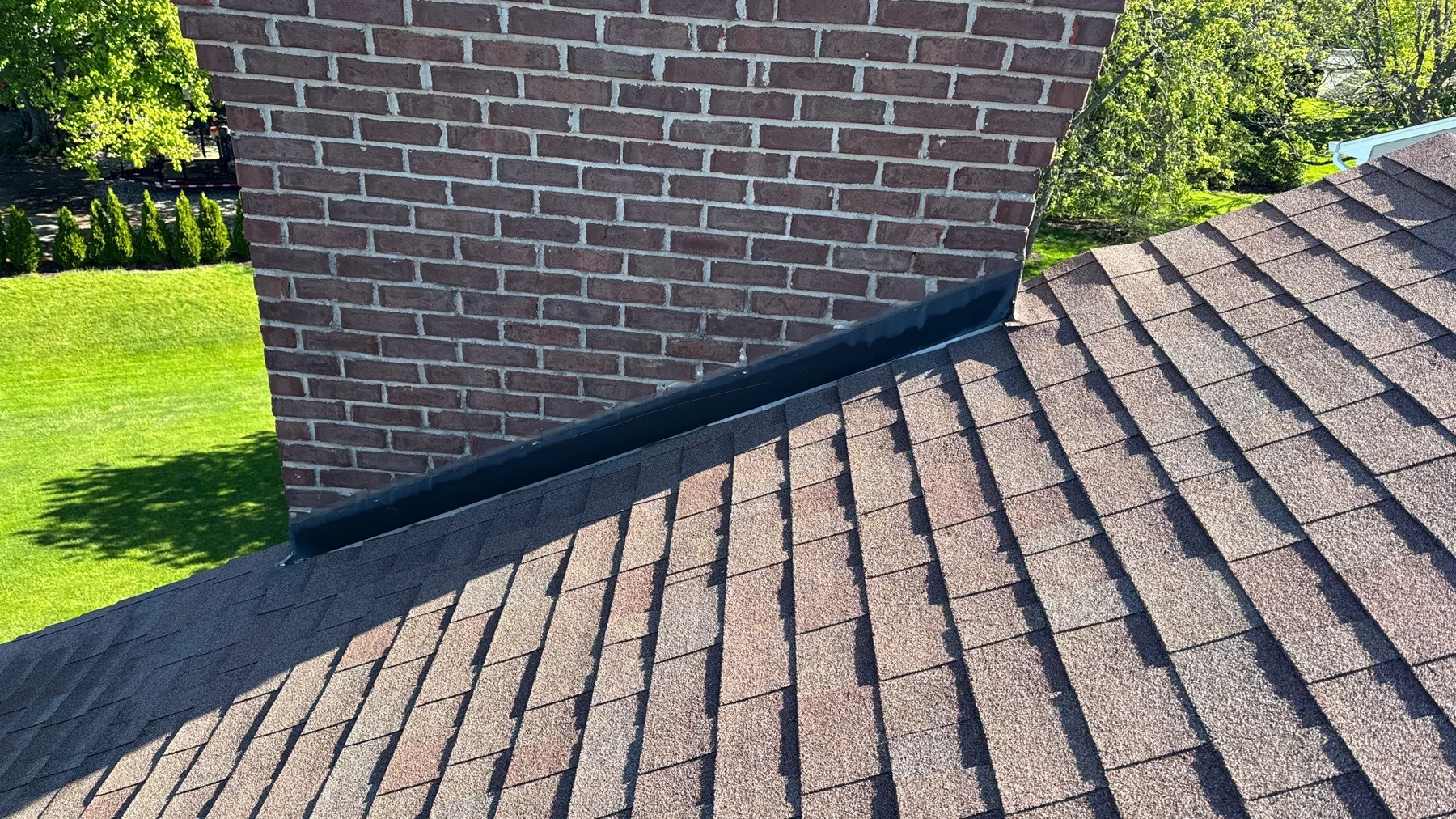
The chimney area had lifted shingles and exposed fasteners that allowed water to enter the roofing system.
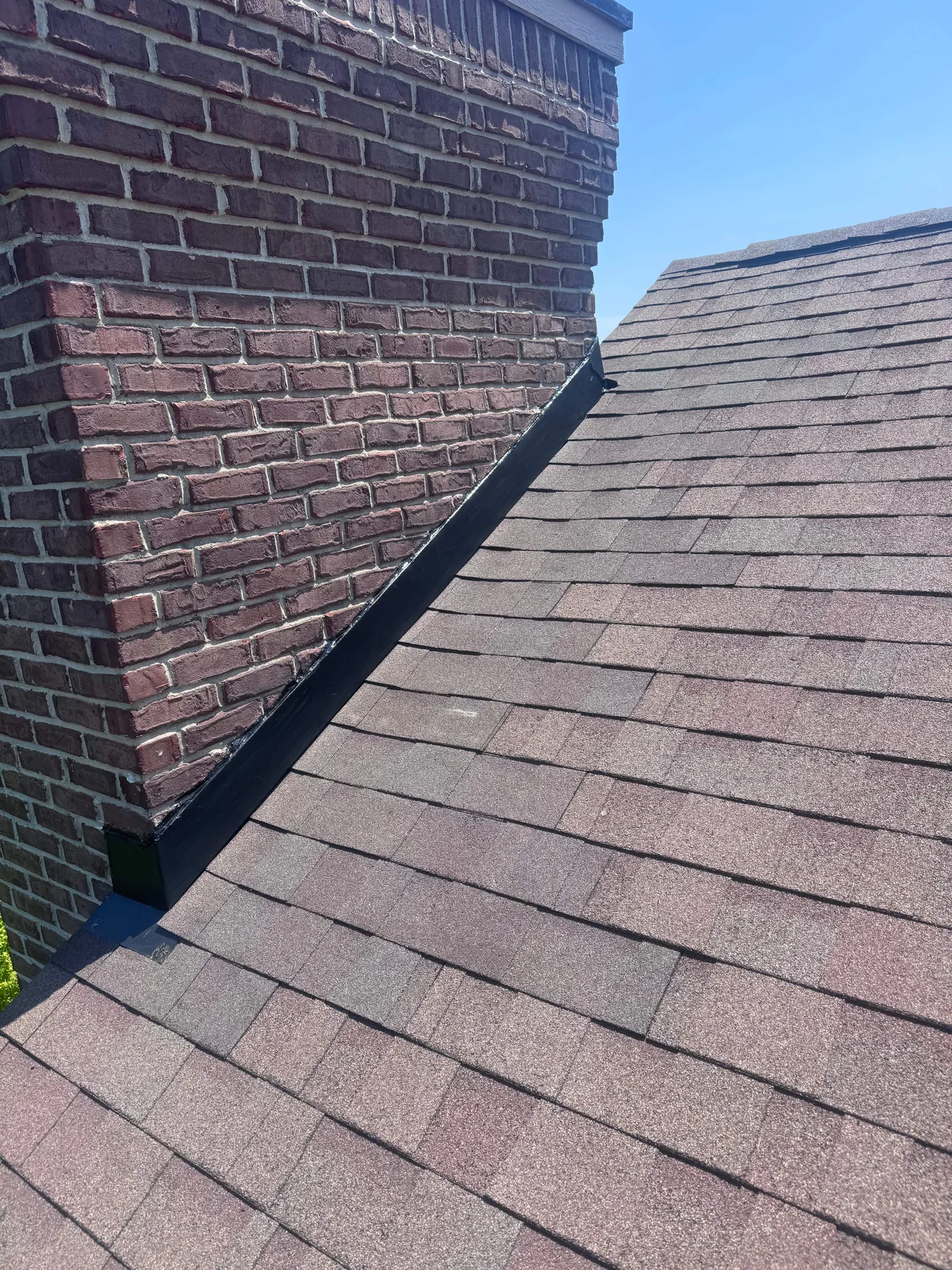
The affected materials were removed and rebuilt with ice-and-water protection, new step flashing, new counterflashing and matching shingles.
The right solution was a localized repair—not a new roof.
A repair may be physically possible without offering good long-term value.
For example, a contractor may be able to replace shingles around one leak while the surrounding roof shows widespread cracking, brittleness or previous repair failures. The immediate area might improve, but the homeowner could continue encountering problems in other locations.
There is also a practical difference between a repair that restores a generally sound system and a repair that temporarily addresses one symptom on a declining roof.
That does not mean every older roof should be replaced. If the failure is isolated, the surrounding materials remain workable and the scope can reasonably solve the problem, repair may still make sense.
The objective is to compare the repair’s cost and expected benefit with the condition and likely remaining service of the entire roof.
We Roof Indy installs established roofing manufacturers, including GAF, Owens Corning, Malarkey and other systems appropriate for the home and project.
Material compatibility matters during a repair. New shingles must integrate correctly with the existing roofing system. Discontinued products, weathered colors, changes in shingle dimensions and brittle surrounding materials can make a close match or reliable installation more difficult.
An exact visual match is not always possible, even when a comparable product is available. Existing shingles change in appearance as they weather, while new shingles begin with their original color and surface condition.
Manufacturer warranty terms vary by product and roofing system. Repairs should use appropriate materials and installation methods, but a localized repair does not automatically void a manufacturer warranty. Homeowners should review the applicable warranty terms because coverage depends on the product, installation and specific circumstances.
After a storm, the construction assessment should focus on the physical condition of the roof:
A contractor can document damage, evaluate repairability and explain the construction scope. Insurance coverage, depreciation, deductibles and policy interpretation are determined by the homeowner’s insurance carrier and the terms of the policy.
The roofing recommendation should remain grounded in the roof’s physical condition regardless of how the insurance claim is evaluated.
Before deciding how to proceed, ask:
A useful proposal should make the scope and limitations understandable before work begins.
Roof-repair pricing can vary significantly because two leaks that look similar inside the home may require very different work on the roof.
A pipe-boot replacement on an accessible, lower-slope roof is different from rebuilding flashing around a tall chimney on a steep, two-story home. The price should reflect the actual labor, materials, access and scope needed to address the failure.
If replacement is also being considered, our 2026 Central Indiana Roof Replacement Cost Guide explains how roof size, materials, pitch, complexity and project scope affect replacement pricing.
Factors affecting repair cost include:
Homeowners do not need to decide whether they need a repair or replacement before contacting We Roof Indy.
The evaluation should begin with the roof itself: what failed, why it failed, what condition the surrounding system is in and what each available option would realistically accomplish.
If a focused repair is appropriate, we will explain the repair and its limitations. If replacement provides better long-term value because of broader deterioration or recurring problems, we will explain the conditions supporting that recommendation.
Yes. A roof can often be repaired when the failure is localized and the surrounding shingles, flashing and decking remain in serviceable condition. The repair should address the actual cause of the problem and integrate correctly with the existing roofing system.
No. A leak may come from an isolated flashing failure, pipe boot, penetration, damaged shingle or another localized condition. The source of the leak and the overall condition of the roof should be evaluated before deciding between repair and replacement.
Sometimes. Age is one factor, but it should not be the only factor. An older roof may still be repairable if the surrounding materials remain workable, the failure is isolated and compatible replacement materials are available. Repair may provide less value if deterioration is widespread or additional failures are likely.
Often, yes. Chimney repairs may involve removing roofing around the chimney, installing appropriate water protection, rebuilding step flashing and counterflashing, and replacing the affected shingles. The exact scope depends on the chimney construction and the condition of the surrounding roof.
A discontinued shingle can make material matching more difficult. A compatible product may still be available, but differences in size, profile, installation requirements or appearance must be considered. Weathering can also make new shingles look different from the existing roof.
That depends on the extent and location of the physical damage, the condition of the surrounding roof and whether the affected materials can be repaired correctly. Localized damage may support repair, while damage across multiple slopes may justify considering replacement. Insurance coverage is determined by the carrier and policy.
Consider what the repair will solve, what conditions will remain and how much useful service life the roof appears to have. A focused repair can be a good investment on a serviceable roof. Repeated or expensive repairs may provide less value when deterioration is widespread or the roof has limited remaining life.