
A Class 4 shingle can be a worthwhile upgrade for a Central Indiana roof.
But the label alone does not tell you everything you need to know.
Homeowners comparing roofing systems will often hear terms such as Class 4, impact-resistant, IR shingle, SBS-modified asphalt and polymer-modified asphalt used as though they mean the same thing.
They do not.
Class 4 describes how a roofing product performed in a standardized impact-resistance test.
SBS describes one method of modifying asphalt to change how the material behaves.
Some Class 4 shingles use SBS-modified asphalt. Other products can achieve Class 4 performance through different materials, reinforcement or construction.
And most importantly: Class 4 does not mean hail-proof.
At We Roof Indy, we install roofing systems from established manufacturers including Malarkey, GAF, Owens Corning and others when appropriate for the project.
The goal is not to put the same shingle on every house. It is to understand what the homeowner wants from the roof and determine whether the additional performance of an impact-resistant product makes sense for that home.
Class 4 generally refers to the highest impact-resistance classification under the UL 2218 testing standard used for prepared roofing materials.
Products are tested under controlled conditions and classified according to the level of impact they withstand without qualifying failure.
Under UL 2218, Class 4 is the highest classification. For the Class 4 test, roofing material is subjected to impacts from a 2-inch steel ball dropped from 20 feet at specified locations.
That gives homeowners and contractors a standardized way to compare impact performance.
It does not mean:
Real storms involve different hail sizes, shapes, densities, wind speeds, impact angles, roof slopes, temperatures and roof ages.
A laboratory rating is useful information. It is not a guarantee against storm damage.
UL 2218 testing uses controlled impacts to evaluate roofing materials.
For Class 4 testing, a 2-inch steel ball is dropped twice from a height of 20 feet onto multiple specified areas of the roofing material. The product is then evaluated for evidence of ruptures or cracking through the material.
The test is valuable because it creates a consistent standard.
A controlled laboratory impact cannot duplicate every condition a roof may experience during an actual storm.
That is why we prefer the phrase enhanced impact resistance rather than hail-proof roofing.
This distinction gets lost surprisingly often.
Class 4 is a performance classification.
It describes how a product performed in standardized impact testing.
SBS is a material technology.
SBS stands for styrene-butadiene-styrene. It is a polymer that can be blended with asphalt to create a more flexible, rubber-like material.
That additional flexibility can help an asphalt roofing product absorb and distribute certain stresses differently than conventional asphalt.
A shingle can be Class 4 because of SBS or another technology. The rating and the material formulation are two different pieces of information.
We Roof Indy is not tied to one shingle manufacturer.
Different products can make sense depending on appearance, budget, availability, warranty goals and the performance characteristics a homeowner values.
Malarkey Vista is an architectural shingle made with NEX polymer-modified asphalt and currently carries a UL 2218 Class 4 impact-resistance rating.
Vista is a product we use frequently when a homeowner wants an architectural shingle with enhanced impact resistance without moving into a designer-shingle category.
GAF Timberline ArmorShield II uses SBS-modified asphalt and carries a UL 2218 Class 4 impact-resistance rating.
Owens Corning Duration FLEX uses SBS polymer-modified asphalt and is currently presented by Owens Corning as a Class 4 impact-resistant shingle.
These are examples, not a ranking. Manufacturer offerings, colors, regional availability and technical specifications can change. The actual roofing system should be selected around the home and project.
Central Indiana does not require every homeowner to install a Class 4 roof.
But impact resistance is reasonable to consider.
Roofs in our area experience a combination of:
Those conditions can expose weaknesses in roofing materials, installation and flashing over time.
An impact-resistant product may provide additional resilience compared with a conventional version of a similar architectural shingle.
That does not mean the shingle should be evaluated in isolation.
A roof is a system.
Depending on the house, a proper replacement may include:
Installing a high-performance shingle over poorly addressed details does not create a high-performance roof.
The installation and the rest of the roofing system still matter.
For a closer look at how We Roof Indy approaches a complete roofing system, visit our Roofing page.
No.
No residential asphalt shingle should be represented as immune to hail damage.
Class 4 means the product achieved a particular result during a standardized laboratory test.
It does not guarantee that the roof will survive every real-world hailstorm without damage.
A severe enough storm can damage roofing materials regardless of their classification.
The better question is:
Does the additional impact resistance of this particular product provide enough value to justify the upgrade for this particular home?
Possibly.
Some insurance carriers offer premium discounts or other incentives for qualifying impact-resistant roofing materials. Others do not.
Eligibility can depend on:
Before choosing a roof based on an expected insurance benefit, ask your carrier:
A potential insurance discount can be part of the decision. It should not be assumed.
Sometimes it is. Other times a quality conventional architectural shingle may still be the sensible choice.
We do not need to force the same answer onto every property.
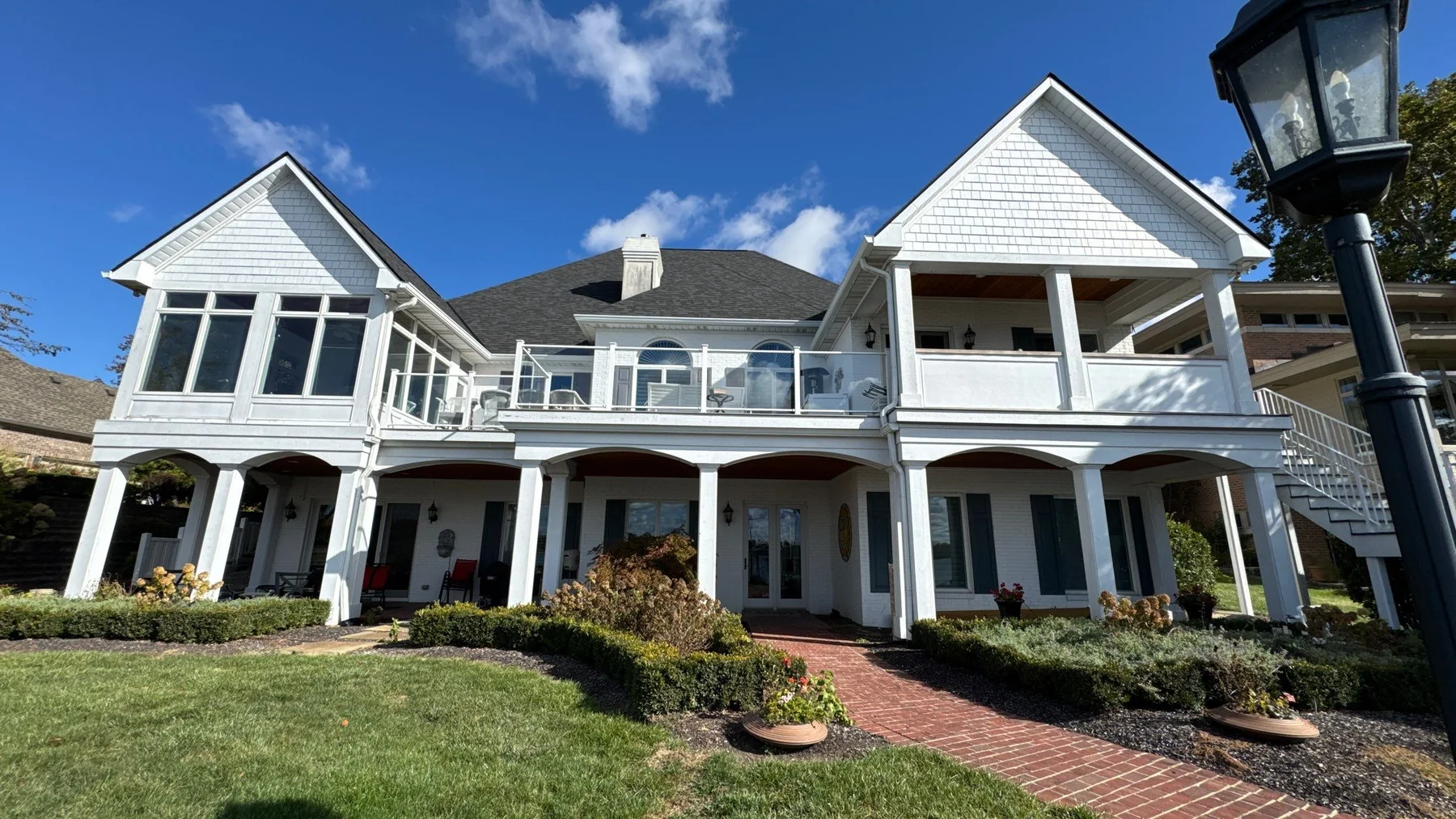
Actual We Roof Indy Class 4 installation — Noblesville, Indiana.
Location: Noblesville, Indiana
Roof area: More than 7,100 square feet before project-specific waste and accessory calculations
Home: Ranch with a two-story walkout condition
Pitch: 12/12 throughout
Roofing system: Malarkey Vista
Color: Brilliant Black
Additional scope: New 6-inch aluminum gutters and selective decking replacement
Completed: October 2025
This was a large, steep and architecturally involved residential roof.
The homeowner selected Malarkey Vista, an architectural shingle with a UL 2218 Class 4 impact-resistance rating.
That impact rating was only one part of the project.
The roof still required proper evaluation of the deck, steep-slope installation procedures, water-management details, ventilation, penetrations, valley construction and gutters.
Two sheets of deteriorated decking were replaced after rot was discovered during tear-off.
The size, 12/12 pitch, height and geometry also created substantially different labor and staging requirements than a smaller, walkable roof.
A better-performing shingle does not eliminate the need for a properly built roofing system.
Class 4 and designer roofing describe different characteristics.
Class 4 describes impact-test performance.
Designer roofing generally describes a product category built around appearance, profile, dimensional depth, weight or specialty architecture.
A designer product may carry an impact-resistance classification. It also may not.
A homeowner primarily interested in the appearance of a shake-style or specialty roof may have a completely different set of priorities from someone primarily concerned with impact resistance.
That is why comparing actual products and roofing systems is more useful than assuming one label means “better.”
The name printed on the shingle wrapper should never be the entire roofing proposal.
There is no useful universal “Class 4 roof price.”
The upgrade is only one component of the project.
Overall replacement cost can also be affected by actual roof area, pitch, height, geometry, access, existing roofing layers, valleys, flashing, penetrations, decking, ventilation, product selection, property protection, specialty details and coordinated gutter or metal work.
For realistic replacement planning ranges and a deeper explanation of the factors affecting price, read our 2026 Central Indiana Roof Replacement Cost Guide.
If you are not sure whether your roof needs replacement in the first place, start with our Roof Repair vs. Roof Replacement Guide.
Class 4 roofing can be a worthwhile upgrade.
Polymer-modified shingles can also offer meaningful material advantages.
But neither term should replace an evaluation of the house itself.
We look at the existing roof, architecture, system details, project complexity, homeowner priorities, available products, budget and intended outcome.
Then we can compare roofing options that actually make sense for the property.
Yes. Under UL 2218, Class 4 is the highest impact-resistance classification.
No. Class 4 indicates performance under a standardized laboratory impact test. It does not guarantee that a roof cannot be damaged by real-world hail.
SBS is a polymer used to modify asphalt. It can create a more flexible, rubber-like material that can better absorb certain stresses and impacts.
No. Class 4 is a performance classification, not a material specification. Roofing products can use different technologies or reinforcement methods to achieve the rating.
Yes. Malarkey’s current technical data lists Vista as UL 2218 Class 4 and describes it as using NEX polymer-modified asphalt.
Possibly. Some carriers offer discounts for qualifying impact-resistant roofing, but eligibility and savings vary by insurer and policy. Verify the benefit directly with your carrier before making a roofing decision based on an expected discount.
It can be. The answer depends on the exact product, upgrade cost, performance priorities, insurance considerations and the overall roofing system.